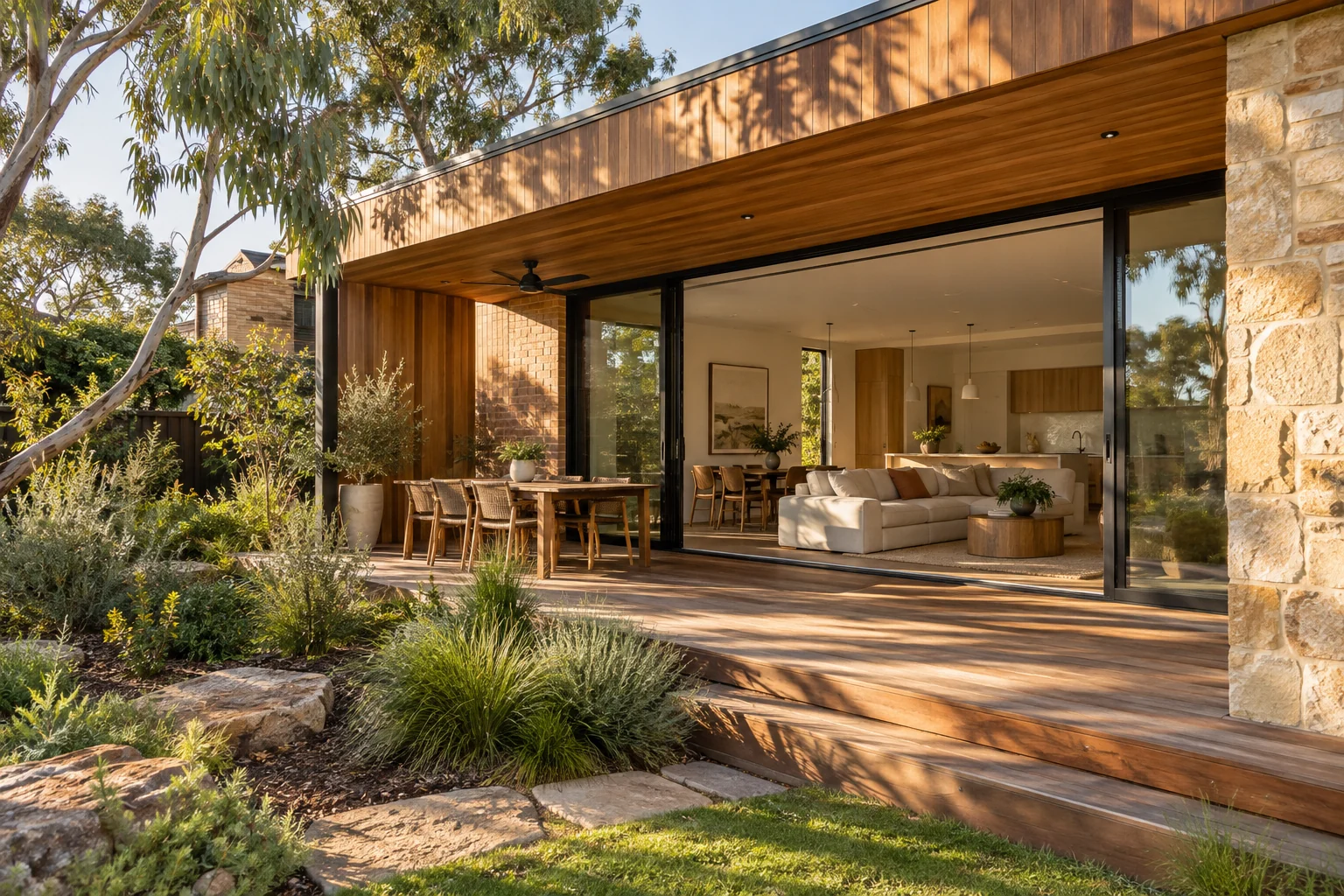
Not just how a room photographs. How it feels on a quiet morning. How it works on a busy one.
01 / CONNECTION
Open to the everyday.
Think about the routes through your home: groceries to the kitchen, coffee to the garden, school bags to a place of their own. Good layouts make those small movements feel easier.
02 / LIGHT
Let the day in.
Follow the sun before moving the walls. Where does morning light land? Which rooms overheat in the afternoon? Window placement and shading should be considered together.
A question for your brief
Which part of your home feels best at different times of day, and why?
03 / FLEXIBILITY
Leave room for change.
A room can have more than one life. A study might become a guest room; an overlooked corner might become a reading spot. Plan storage, power and access around that flexibility.
A question for your brief
What might your home need to do differently in five years?
04 / MATERIALS
Honest materials. Quiet character.
Timber brings warmth. Stone brings weight and texture. Metal can give a junction definition. The strongest material palettes balance these qualities without asking every surface to stand out.
Choose for the life of the room: moisture, sunlight, daily wear and the care you’re prepared to give.